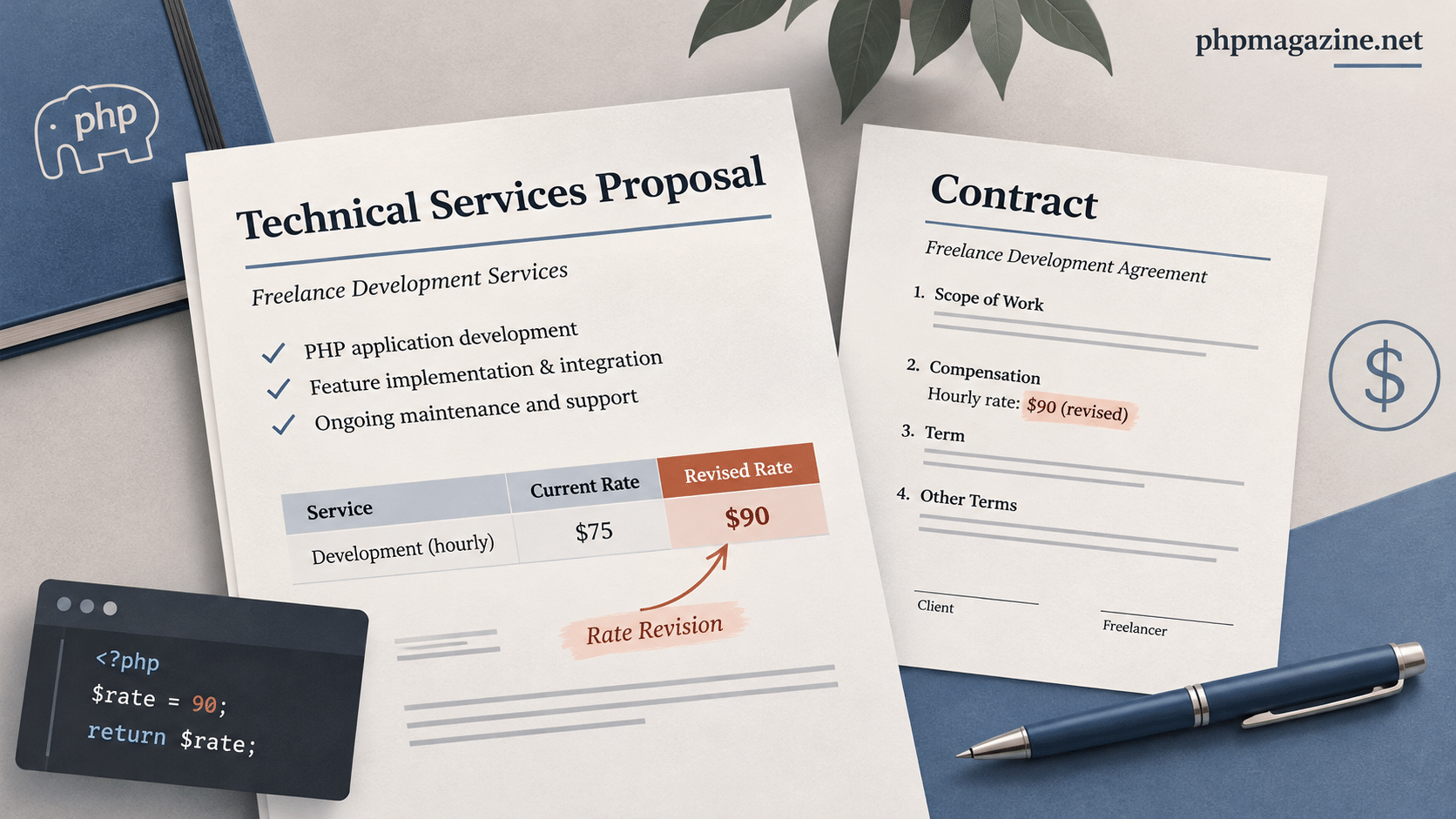
A freelance developer can spend years improving their skills while continuing to charge a rate set at the beginning of their career. Meanwhile, the work has changed: projects are more complex, clients expect broader judgment, and the developer may be paying for tools, insurance, training, and time that cannot be billed directly.
Reviewing a rate is a business decision. Communicating it well means understanding the numbers, respecting existing commitments, and giving clients enough information to plan.
Understand what the rate must support
An hourly rate is not the same as an employee’s hourly wage. A freelancer may spend part of the week on proposals, administration, professional development, and other work that is not invoiced to a specific client. Equipment, software, taxes, leave, and gaps between projects also need to be considered.
Estimate the income the business needs, the expenses it must cover, and a realistic number of billable hours. This can establish a planning baseline, not a guaranteed market price. The appropriate rate also depends on the service, customer, demand, and the value and risk of the work.
Check the agreement before announcing a change
Existing contracts may specify rates, notice periods, renewal dates, or a process for changing terms. Review those commitments before contacting the client. A rate for new work does not automatically alter a fixed-price project already agreed.
For ongoing work, decide when the new rate should begin and whether any current statement of work continues under the existing terms. If the agreement is unclear, obtain appropriate advice before assuming that a unilateral change is permitted.
Give a clear notice
A concise message can state the new rate, effective date, and the work to which it applies. Give the client a route to discuss the change and enough notice to plan, consistent with the agreement.
For example: “Beginning on the agreed renewal date, my rate for new development work will be $X per hour. Work already covered by our current statement of work will continue under its existing terms. I would be happy to discuss upcoming priorities and how this affects your plans.”
The wording should fit the real contract and relationship. There is no need to invent a dramatic explanation or promise that the rate will never change again.
Prepare for different responses
A client may accept, ask questions, reduce the amount of work, or decide to use another supplier. Before the conversation, consider which alternatives you can offer: a smaller scope, a different schedule, or a separate agreement for a defined deliverable. Avoid reducing the price immediately without understanding which constraint the client is facing.
Reviewing rates periodically can make the process less abrupt for both sides. The goal is a sustainable arrangement in which the client understands what they are buying and the developer can continue delivering the work responsibly.
Related
raising-your-freelance-rate-without-making-the-conversation-about-an-apology